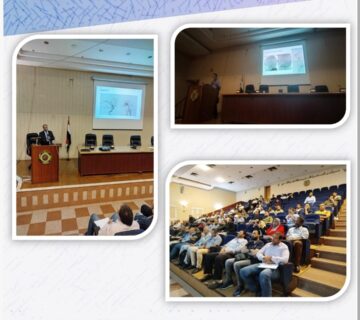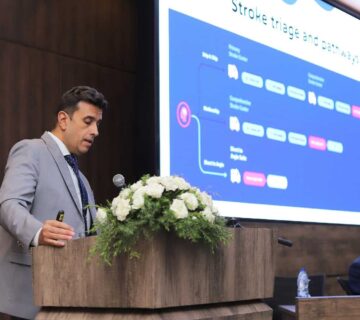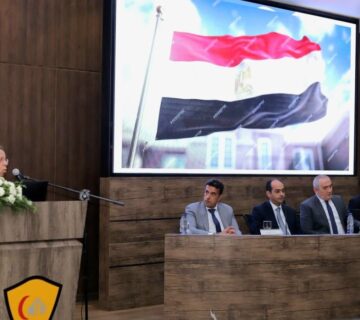
The General Authority for Hospitals and Teaching Institutes announced yesterday the launch of a professional diploma in interventional cerebral catheterization , organized by the Authority’s General Secretariat Training Center and previously approved by the Egyptian Health Council and the Medical Syndicate, with the aim of developing specialized medical competencies in the field of brain and nerve diseases and cerebral catheterization.
Dr. Mohamed Mostafa Abdel Ghaffar, head of the General Authority for Hospitals and Educational Institutes, stated that emergency medicine is the main driver of any medical facility, and that developing this specialty is a top priority among the Authority’s strategic objectives, in line with the directives of the Deputy Prime Minister and Minister of Health and Population to give top priority to emergency medicine, This is due to the increasing numbers of patients received by the reception and emergency departments of the Authority’s hospitals and institutes, with the Authority receiving approximately 1.7 million patients from the beginning of 2025 to date. In order to serve these patients in a professional and distinguished manner, there is a need for continuous medical training and education for medical staff. This training must be part of an integrated system that provides trainees with the best and most up-to-date training programs, in addition to obtaining an accredited certificate that qualifies them to work in this field.
He emphasized that the Authority attaches great importance to training programs related to cerebral catheterization and stroke treatment, foremost among which is this diploma program that we are launching today. The Authority is keen to register its stroke treatment units with the World Stroke Organization, The Authority’s hospitals recently received three awards from this organization for their excellence during the second quarter of 2025, confirming the presence of medical cadres, capabilities, and advanced equipment that qualify it to implement the training program for this diploma with confidence and competence.
He added that the Authority has organized more than 4,000 scientific and research events in the past period, including workshops, seminars, conferences, training courses, scientific days, and discussion panels, attended by 65,000 trainees and those interested in the field of training and research. This number reflects the Authority’s interest in training and applied scientific research, which has been the primary goal of the General Authority for Hospitals and Educational Institutes for 50 years.
He concluded his speech by thanking Dr. Mohamed Lutif, President of the Egyptian Health Council, and Dr. Osama Abdel Hay, President of the Egyptian Medical Syndicate, for their continued support and unlimited cooperation with the Authority in accrediting specialized professional diplomas and presenting them in a manner befitting Egyptian doctors, which ultimately leads to the provision of distinguished medical services to patients, the ultimate goal we all strive to achieve.
For his part, Prof. Mohamed Lutif, CEO of the Egyptian Health Council, praised the efforts of the General Authority for Hospitals and Educational Institutes to improve the level of health services provided to patients through training programs and specialized professional diplomas, which the Authority is keen to have accredited by all relevant authorities, foremost among which is the Egyptian Health Council, thereby conferring on them high scientific and professional value and enhancing the status of their graduates at the professional and medical levels, which is fully consistent with the Authority’s research and training role.
In his speech, Dr. Osama Abdel Hay, President of the Medical Syndicate, thanked the Authority for its efforts in the field of continuing medical training and education, in conjunction with the activation of the Medical Liability Law, and that the Authority is keen to accredit the specialized professional diplomas it organizes through the Authority’s General Secretariat Training Center for various specialties, especially the more specialized ones. The most important feature of this diploma is that it covers three complementary specialties, namely neurology, neurosurgery, and interventional radiology, providing integrated medical teams trained to the highest standards.
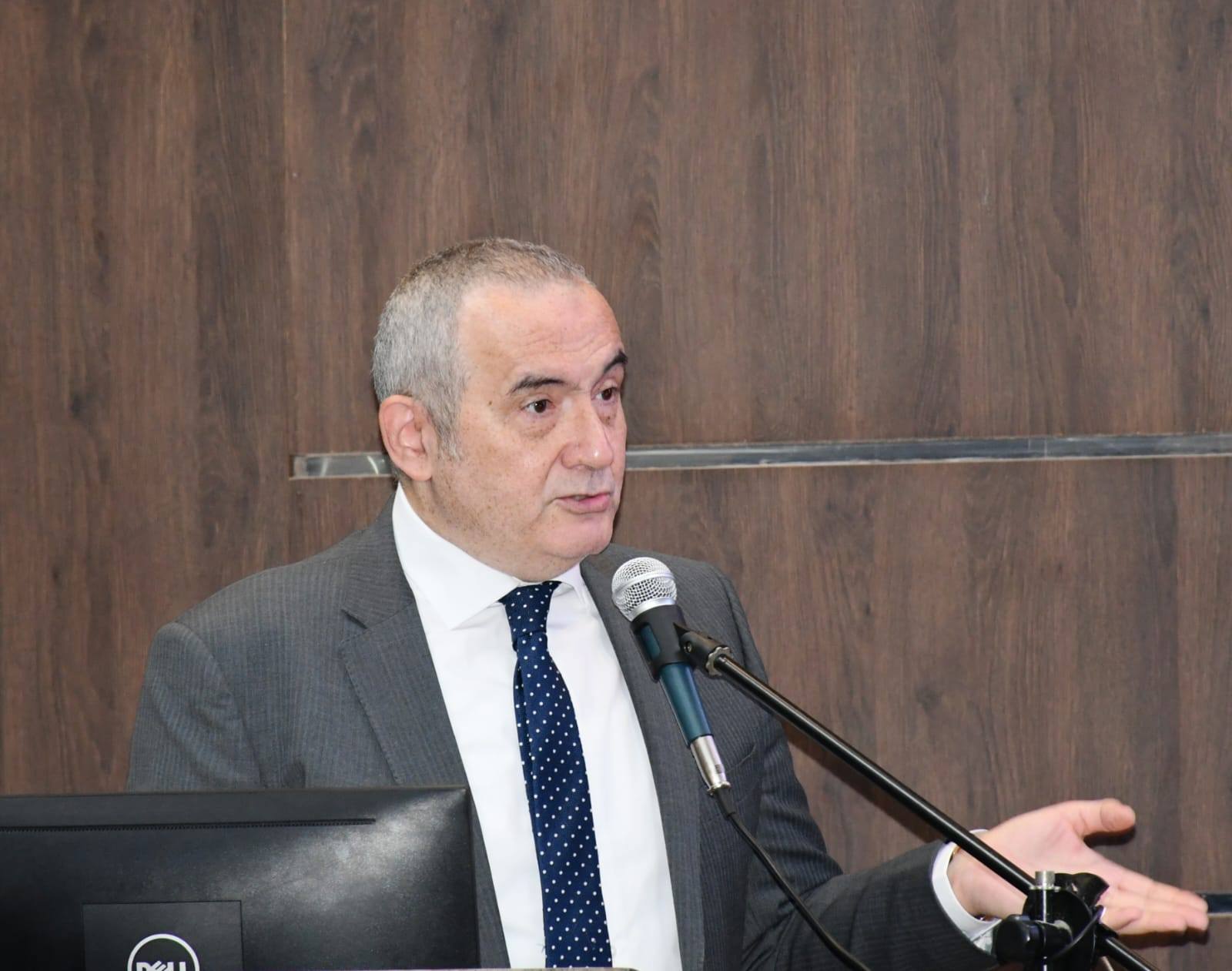
Dr. Ahmed Al-Basyouni, professor of neurology and program director, pointed out that the professional diploma in cerebral catheterization represents a qualitative addition to specialized training programs in Egypt and reflects the interest of hospitals and educational institutes in advanced training programs. It is the first of its kind in the region for interventions in the field of cerebral catheterization. The program lasts two years and is the culmination of a high-level institutional collaboration between the General Authority for Hospitals and Educational Institutes, the Egyptian Health Council, and the Medical Syndicate. The importance of this diploma is highlighted by the fact that we are in dire need of this rare specialty, and we need to train 150 doctors in all cerebral catheterization procedures to deal with approximately 50,000 to 60,000 cerebral catheterization cases annually. There must be a specialized center in every governorate throughout the country to deal with strokes through emergency interventional cerebral catheterization, This requires advanced medical equipment and highly trained personnel. This diploma aims to provide them with the latest knowledge and skills in the field of interventional cerebral catheterization, which plays a vital role in treating many complex cases such as cerebral thrombosis, aneurysms, and other diseases affecting the cerebral blood vessels. The scientific board of the diploma includes a select group of neurology professors from all medical institutions, led by hospitals and educational institutes.
Source : Youm7