Training Models (Structure & Credit Hours)
- Didactic Curriculum
- Patient Care Experience
- Hands-on Simulation Training!
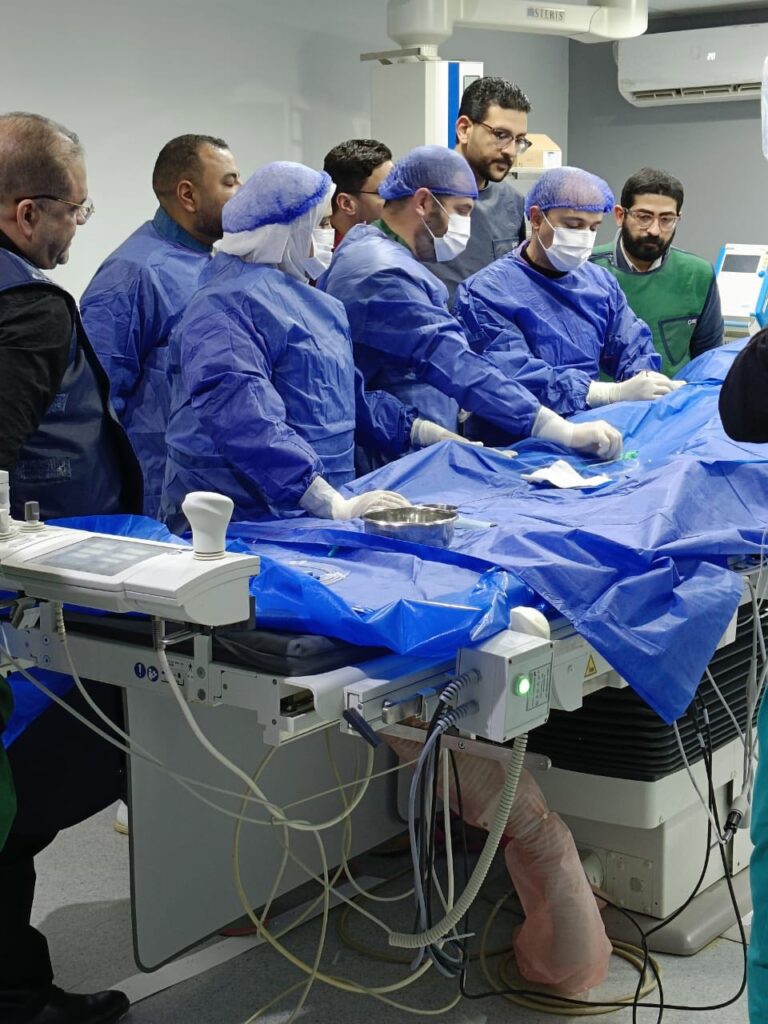
- Cath Lab Neurovascular Interventions
Objective: Deliver foundational knowledge in neurointervention through structured learning.
Total Duty Hours: 52 hours
Components:
Lectures & seminars across 8 modules
Journal clubs & case-based discussions
Expert-led interactive case reviews
Self-directed learning (reading, online modules, quizzes)
Pre- and post-module knowledge assessments
Objective: Provide clinical exposure in real patient settings under supervision.
Total Duty Hours: 276 hours
Components:
Inpatient stroke unit & neurocritical care participation
Outpatient evaluation and follow-up of neurovascular patients
Multidisciplinary rounds and emergency stroke responses
Objective: Develop procedural skills in a risk-free, controlled environment.
Total Duty Hours: 32 hours
Components:
Computer-Based Simulators (e.g., Mentis®):
Practice catheter navigation, thrombectomy, coiling, embolization3D Physical Models & Flow Phantoms:
Simulate AVM/aneurysm treatment strategies
Objective: Achieve procedural competence under progressive supervision.
Total Duty Hours: 342 hours
Progression Model:
Observation → Assistant operator → Primary operator (under direct supervision) → Independent with assistance → Fully independent
Scope:
Diagnostic angiography
Therapeutic procedures (e.g., stenting, coiling, embolization)
According to the NEVID program, the training institutions must include:
Stroke Units & Neurocritical Care Units
Including both adult and pediatric patients.
Facilities must either have dedicated neuro ICU beds or assigned beds within a general ICU.
Neuroimaging & Neuroradiology Department
For diagnostic interpretation, angiography, and imaging-guided decision making.
Outpatient Stroke Clinics
For evaluation, counseling, follow-up, and long-term patient management.
Intervention Catheterization Lab (Cath Lab)
Equipped for neurovascular diagnostic and therapeutic endovascular procedures.
Provides scientific foundations, clinical skills, and practical expertise for safe and effective neurovascular catheterization.
Delivered by leading professors of neurology, neurosurgery, and interventional radiology from both within GOTHI and external institutions.
Graduates will be qualified to safely and accurately perform neurovascular catheterization in line with the latest training methodologies and international guidelines.